Academic case study A06
Memento
A smart pill container supporting therapy adherence for chronic patients and their caregivers
- Period
- 2019–2022 — BSc coursework
- Context
- Interaction design course on a Palladio Group brief — academic concept
- Role
- UX researcher: contextual interviews, direct observation, personas, and concept design
- Programme
- BSc coursework — Interaction Design, University of Siena
- Team
- Two-designer team
- 7 mln
- Italians live with chronic conditions
- 50%
- only half take their medication correctly
- 6
- color-coded medications in one dock
Problem
- 7 mln
- people in Italy affected by chronic conditions
- 50%
- only half take their medication correctly
Long-term therapy adherence breaks where routine breaks: holidays, distractions at meals, memory problems. Two anxieties dominate — the caregiver who can't monitor intake from a distance, and the patient unsure whether a dose was already taken, who then skips it for fear of overdosing.
Target user
The research was built on contextual interviews and direct observation of four users — three patients with multiple conditions and one caregiver. Two concept personas synthesize the needs:
Viola
30 — flight attendant
- Profile
- Migraine with aura; multiple sclerosis diagnosed at 21, interferon three times a week. Always traveling.
- Goal
- Carry her therapy discreetly and never lose track of it across time zones.
Giorgio
45 — wine sales rep
- Profile
- Hyperthyroid, hypertension for about two years, a two-year-old daughter and a life on the road.
- Goal
- Motivation and reminders that survive busy, irregular days.
My role
I worked as observer and UX researcher in a two-person team: conducting the contextual interviews and observation sessions, distilling pain points and personas, and shaping the concept and storyboard with the insights.
Process
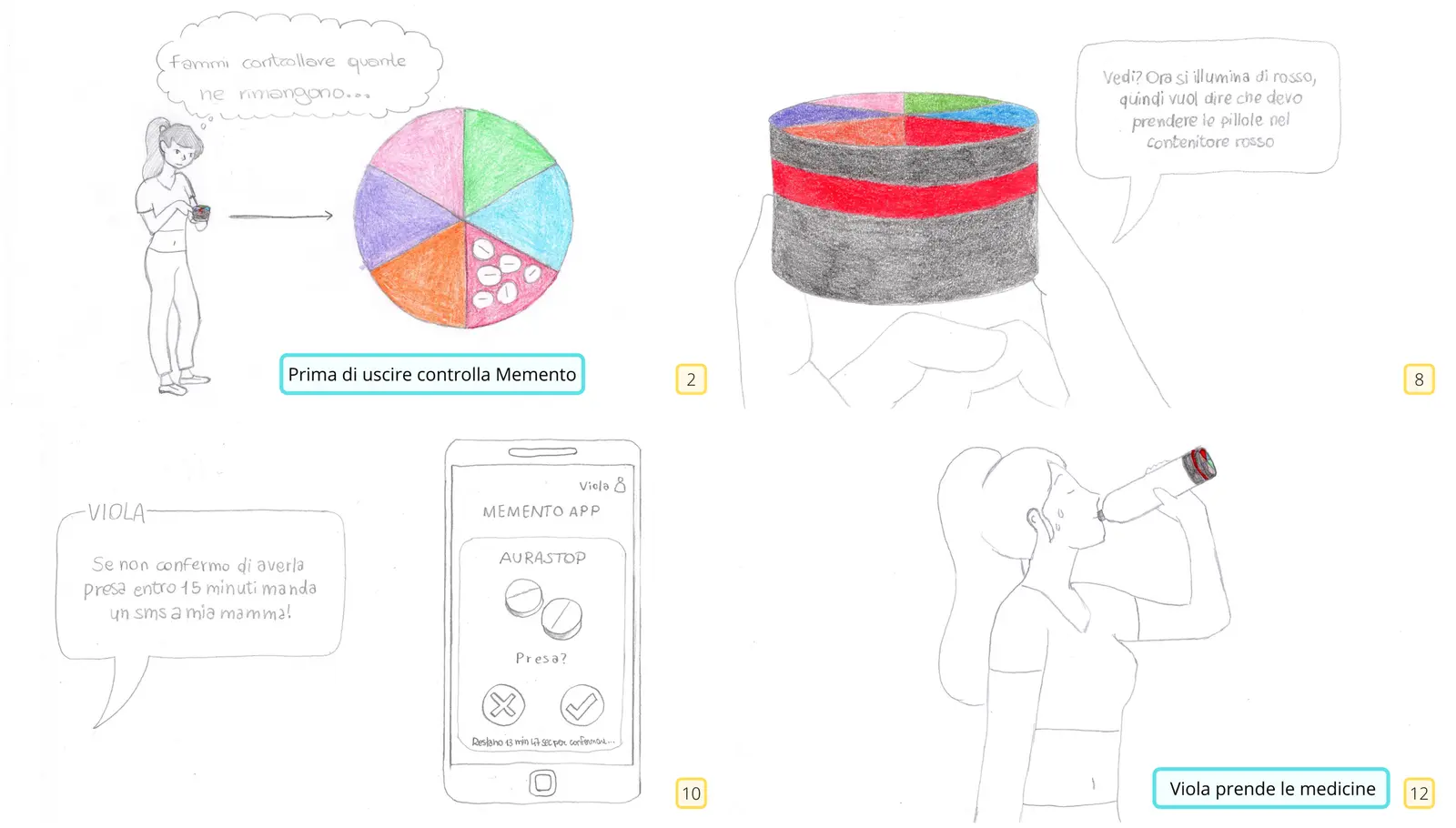
Interviews covered profiles from a 19-year-old with autoimmune conditions to a 60-year-old managing hypertension and gastritis, plus a caregiver for a diabetic patient. The recurring pains: remote-monitoring anxiety, double-dose doubt, and therapies that collapse outside home routine. A thirteen-panel hand-drawn storyboard walked Viola's day with Memento — from the morning reminder to the red-LED alert and the caregiver notification.
Key decisions
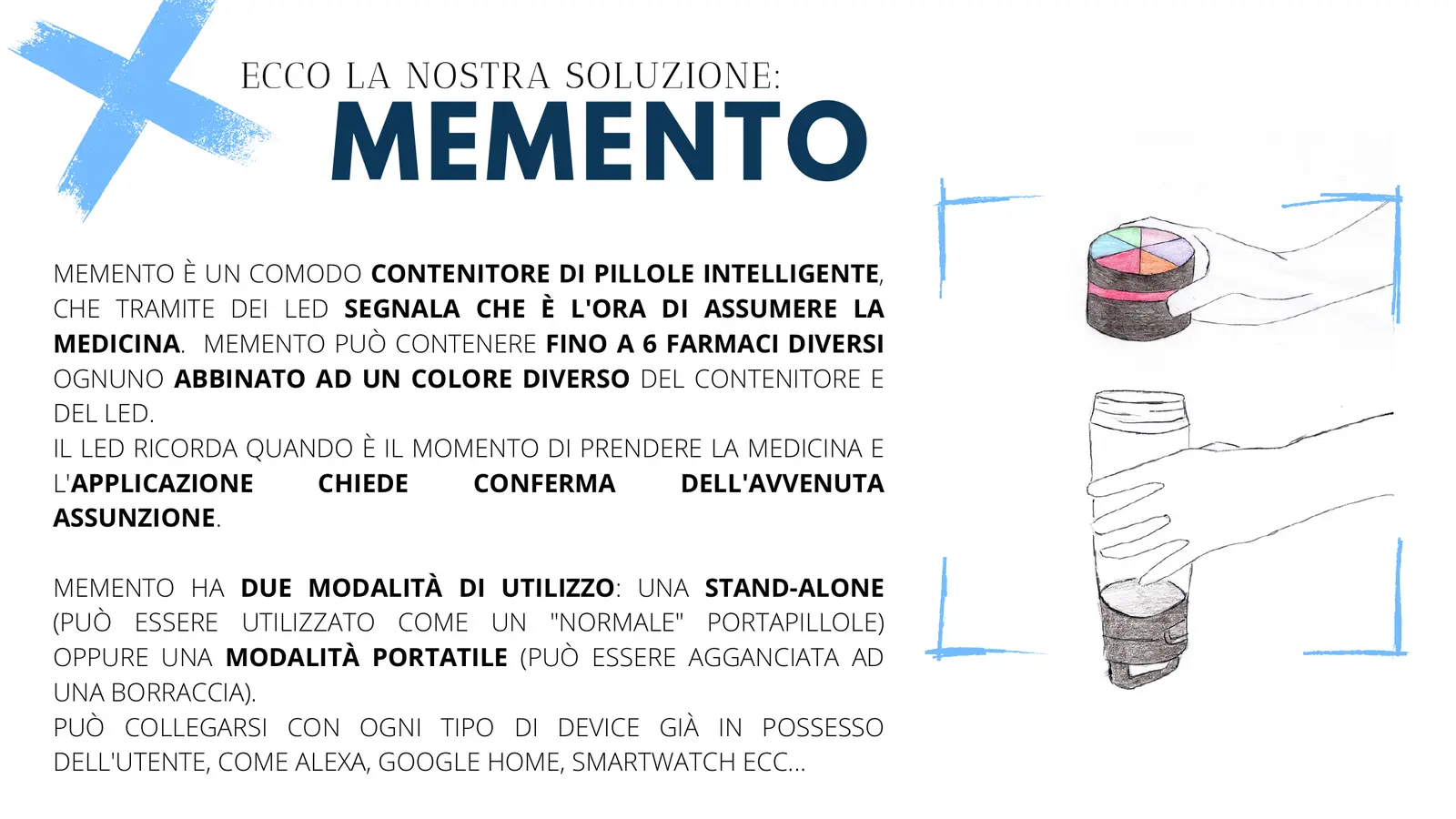
- A dock holding up to 6 medications, each mapped to a color of the container and of the 360° LED ring — the answer to “did I already take it?”.
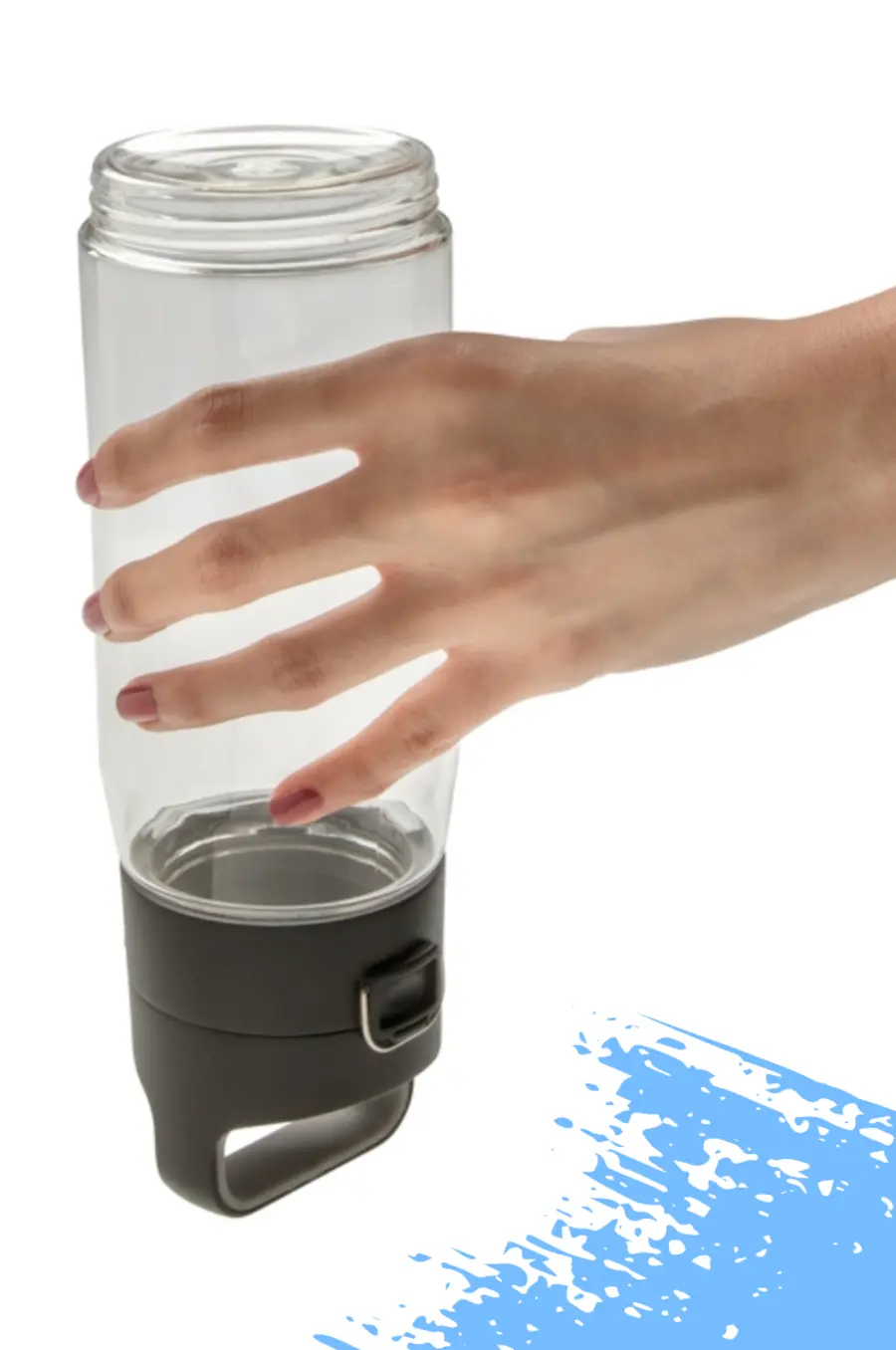
- Two usage modes: stand-alone at home, or portable screwed onto a dedicated bottle — therapy and the water to take it, together.
- The app confirms intake and automatically notifies the caregiver on missed doses — relieving both anxieties at once.
- Integration with devices users already own — Alexa, Google Home, smartwatch — instead of adding a new screen to learn.
Final result
The final concept ties three components together — the Memento dock, the dedicated bottle, and the app with Bluetooth pairing, caregiver alerts, and motivation via Google Fit — presented with hand-drawn device sketches and the full storyboard.
What I learned
- Technology sticks when it rides an existing routine — pills next to the toothbrush beat any notification system.
- Older users who feel bypassed by digital need radically simple interfaces; every extra option is a reason to give up.