Academic case study A05
CERLES
The getting-started experience for Siena's first renewable energy community
- Period
- 2022 — BSc thesis
- Context
- BSc thesis with Comitato Siena 2, promoter of the Siena Nord renewable energy community (CER)
- Role
- Sole UX designer across the full cycle — research, strategy, UX and UI up to the hi-fi prototype
- Programme
- BSc thesis — Communication Sciences, University of Siena
- 6
- prototype iterations on weekly client feedback
- 16
- contextual interviews with citizens
- 2/16
- knew they could join a CER without owning panels
Problem
The energy transition asks citizens to become active players — prosumers — but the road into a renewable energy community (CER) is paved with fragmented, contradictory, overly technical information and a legislative process in constant motion. Interest is growing; understanding isn't.
- 1,1 °C
- temperature rise since the late 19th century
- 2/16
- interviewees knew participation doesn't require a photovoltaic system
Source: ISPRA
Target user
Carmine
51
- Profile
- Pragmatic; wants to verify the primary substation and the current legislative status before moving.
- Goal
- Understand whether his home can technically join the community.
Laura
38
- Profile
- Focused on the economics: discovering the incentives and monitoring how they are split.
- Goal
- Know exactly what joining is worth on the bill.
Rosa
32
- Profile
- Environmentalist, social-media savvy; wants clarity on panel disposal and environmental benefits.
- Goal
- Contribute to the planet without greenwashing doubts.
Giuseppe
70 — retired
- Profile
- Low digital literacy, helped by wife and daughter; prefers traditional and phone contact.
- Goal
- Understand whether he can participate without solar panels.
My role
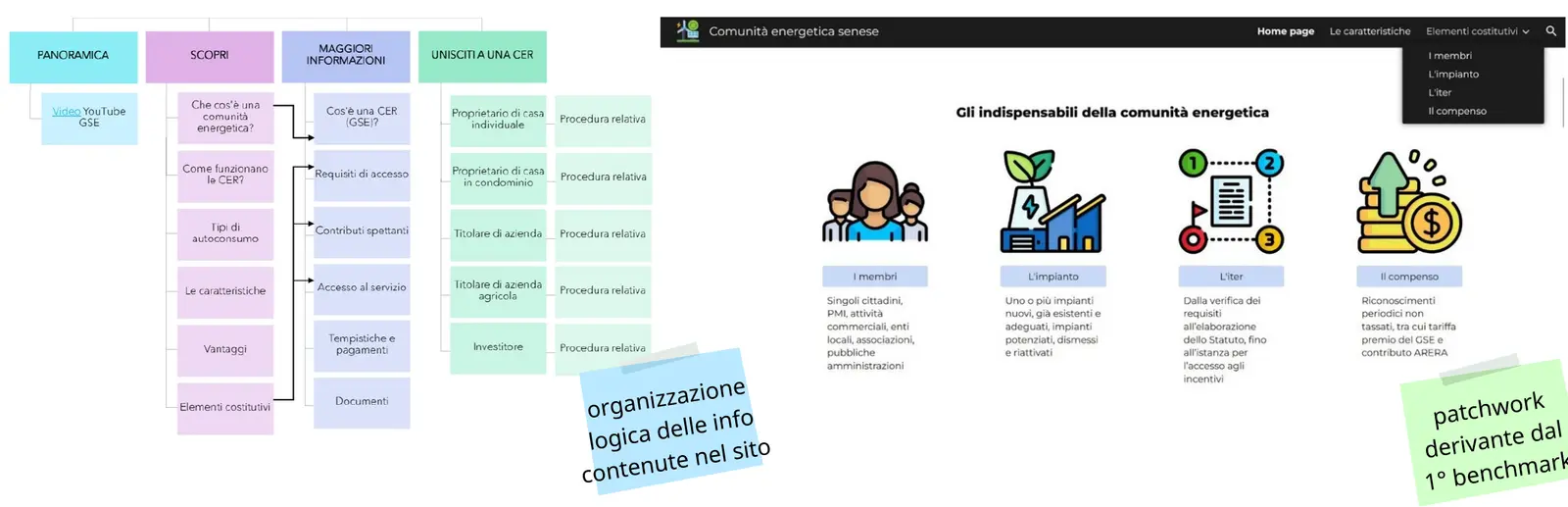
As the sole UX designer I owned the entire design cycle, acting as the bridge between Comitato Siena 2 — the community's promoting body — and the local citizens: research and strategy (interviews, benchmark, competitor analysis), UX (information architecture, personas, journeys), and UI (iterative mock-ups up to the hi-fi version).
Process
01
Empathize
FAQ analysis (Enel, ènostra, GSE…), heuristic benchmark of communities like Grupo Creluz (Brazil) and Brooklyn Microgrid, and 16 contextual interviews.
02
Define
4 research-based personas, 8 user journeys exposing pain points like the POD code and the GSE site, and How-Might-We questions.
03
Ideate
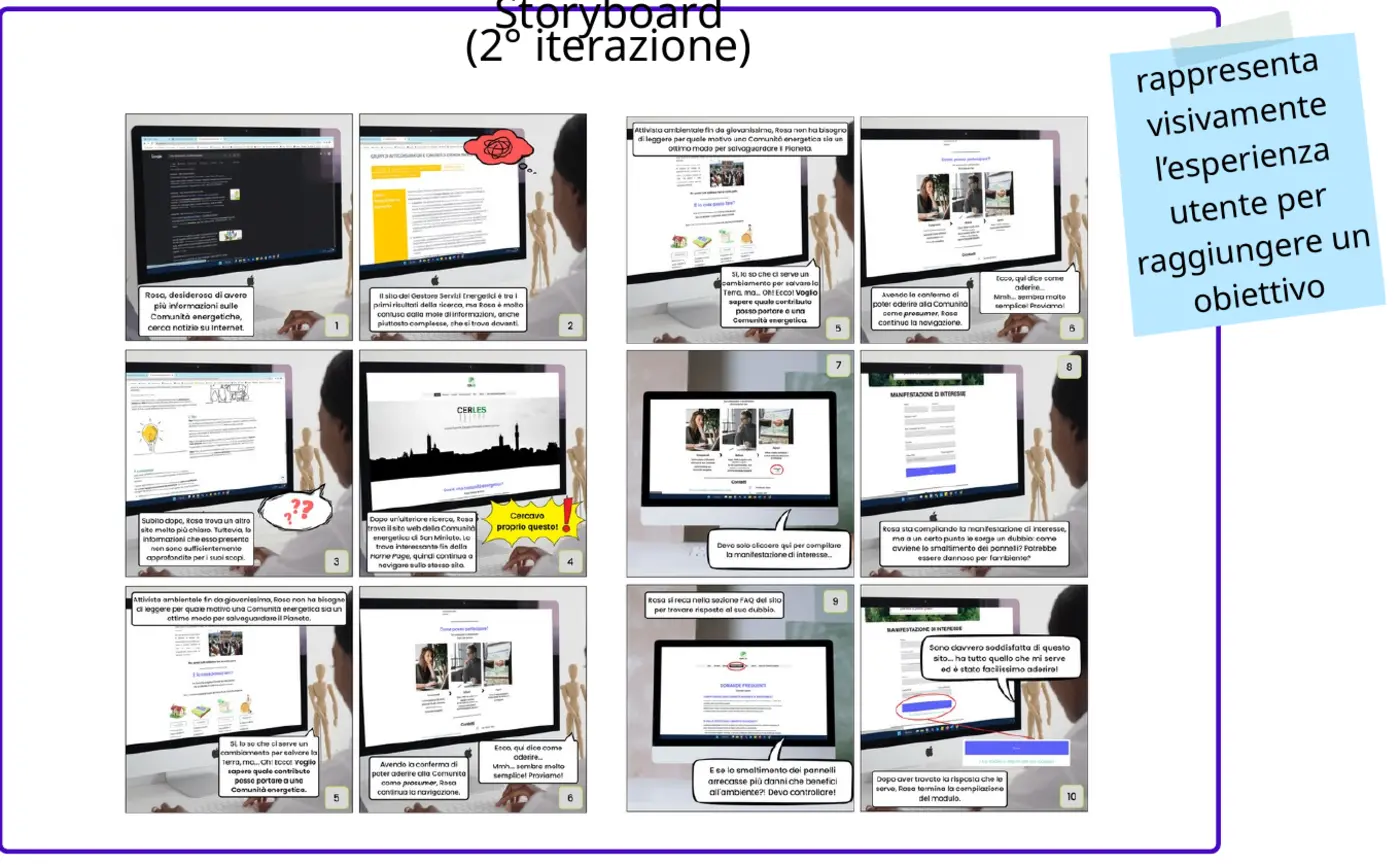
Two storyboard iterations to place the energy community inside citizens' daily lives, and a progressive-disclosure information strategy.
04
Prototype
6 iterations driven by weekly feedback with the client, from the information architecture to the hi-fi prototype.
01 · Trigger
- Actions
- Giuseppe hears about CERs on TV and looks them up on the internet.
- ▾ Pain point
- The search returns a confusing mass of different pages and sources.
- ▸ Opportunity
- A very simple guide gathering all the key information.
02 · Phase 1
- Actions
- After reading a few sites, it's still unclear whether he can join without solar panels.
- ▾ Pain point
- Information that should be immediately clear to everyone isn't.
- ▸ Opportunity
- Spell out the community roles directly on the home page.
03 · Phase 2
- Actions
- He asks his daughter to check online for him, but even she can't figure it out.
- ▾ Pain point
- The answer is hard to find or given as obvious — it can make interested users give up.
- ▸ Opportunity
- Write out even what seems obvious.
04 · Phase 3
- Actions
- He wants to talk to a person: he calls the number in the site's contact section.
- ▾ Pain point
- He'd have preferred to find the answer on the site itself.
- ▸ Opportunity
- The FAQ section must contain these answers.
05 · Goal
- Actions
- He completes his membership in the CER as a consumer.
- ▸ Opportunity
- Give the FAQ a highlighted position on the site.
Key decisions
- Progressive disclosure: bureaucratic depth is revealed gradually so first contact never overwhelms.
- A podcast-style audio explaining the basics — an access route for users who won't read normative text.
- A searchable FAQ in a highlighted position, answering even the “obvious” questions the interviews proved weren't obvious.
- An expression-of-interest form where the POD code is optional — it speeds up paperwork without blocking whoever can't find it.
Final result
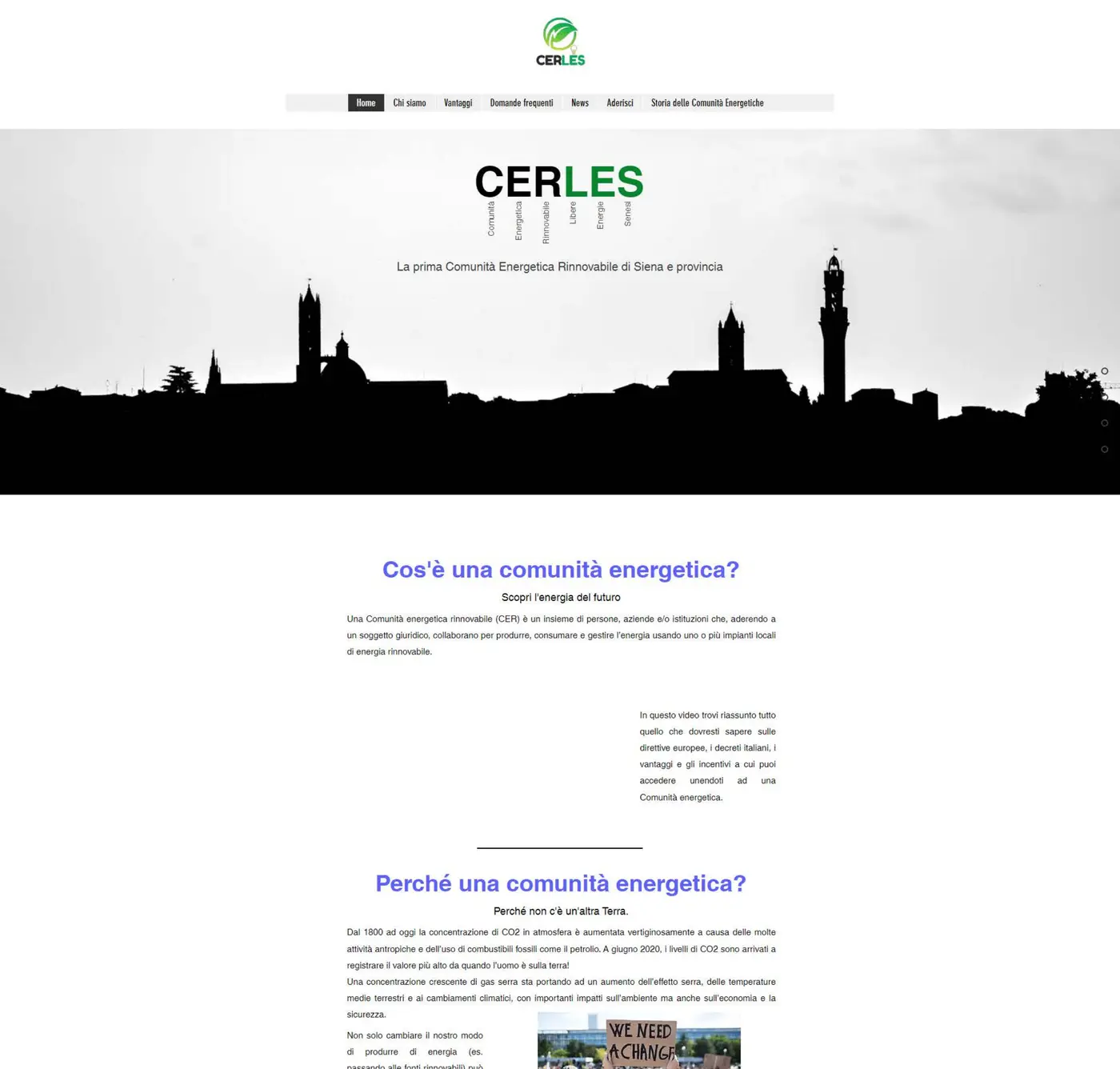
The sixth iteration is a hi-fi prototype built on Wix: an impact home stating the energy transition plainly, benefits split into economic, environmental, and social, searchable FAQs, a news section tracking the legislation — the trust builder — and the simplified expression-of-interest form.
What I learned
- Design for trust: in projects with real economic and social stakes, clarity beats aesthetics, and transparency about the law is what reassures most.
- Weekly iteration with the client was vital to keep the prototype aligned with the community's real needs.
- Turning technical terms (POD, primary substation) into concepts people can absorb is the designer's real mission in this sector.