Academic case study A04
ScanEat
A food-sharing service connecting universities and local producers against food waste
- Period
- 2022–2024 — MSc coursework
- Context
- Design Thinking course, University of Siena — academic concept
- Role
- Designer in the team, from cultural probes to prototype testing
- Programme
- MSc coursework — Design Thinking, University of Siena
- Team
- Team of 5 designers
- 52%
- of Italians cut food spending
- 93,3%
- of surveyed students would pre-book the box
- 3×
- weekly deliveries of seasonal local produce
Problem
- 52%
- of Italians reduced food spending due to rising prices
- 60%
- among low-income households (24% among high-income)
Source: Coldiretti/Censis, nov 2022
Source: Coldiretti/Censis, nov 2022
The “food divide” hits off-site students and young workers hardest: they need good food at fair prices, while families and retailers want to stop throwing away produce that is perfectly fine but aesthetically non-standard.
Target user
Enrico
21 — off-site student, San Lorenzo (FI)
- Profile
- Limited budget, little time, no car: shopping is a compromise between price, quality, and distance.
- Goal
- Quality food at a contained cost, picked up near the university.
Cultural probes — food diaries, city maps, emotion sheets — and questionnaires with university students validated the need: 75% were interested in the service, 93,3% would pre-book the box, 73,3% saw product swapping as a reason to participate.
My role
Designer in a five-person team through the full Design Thinking cycle: probes, questionnaires, POV and How-Might-We definition, brainwriting, and usability testing on both the digital and the physical prototype.
Process
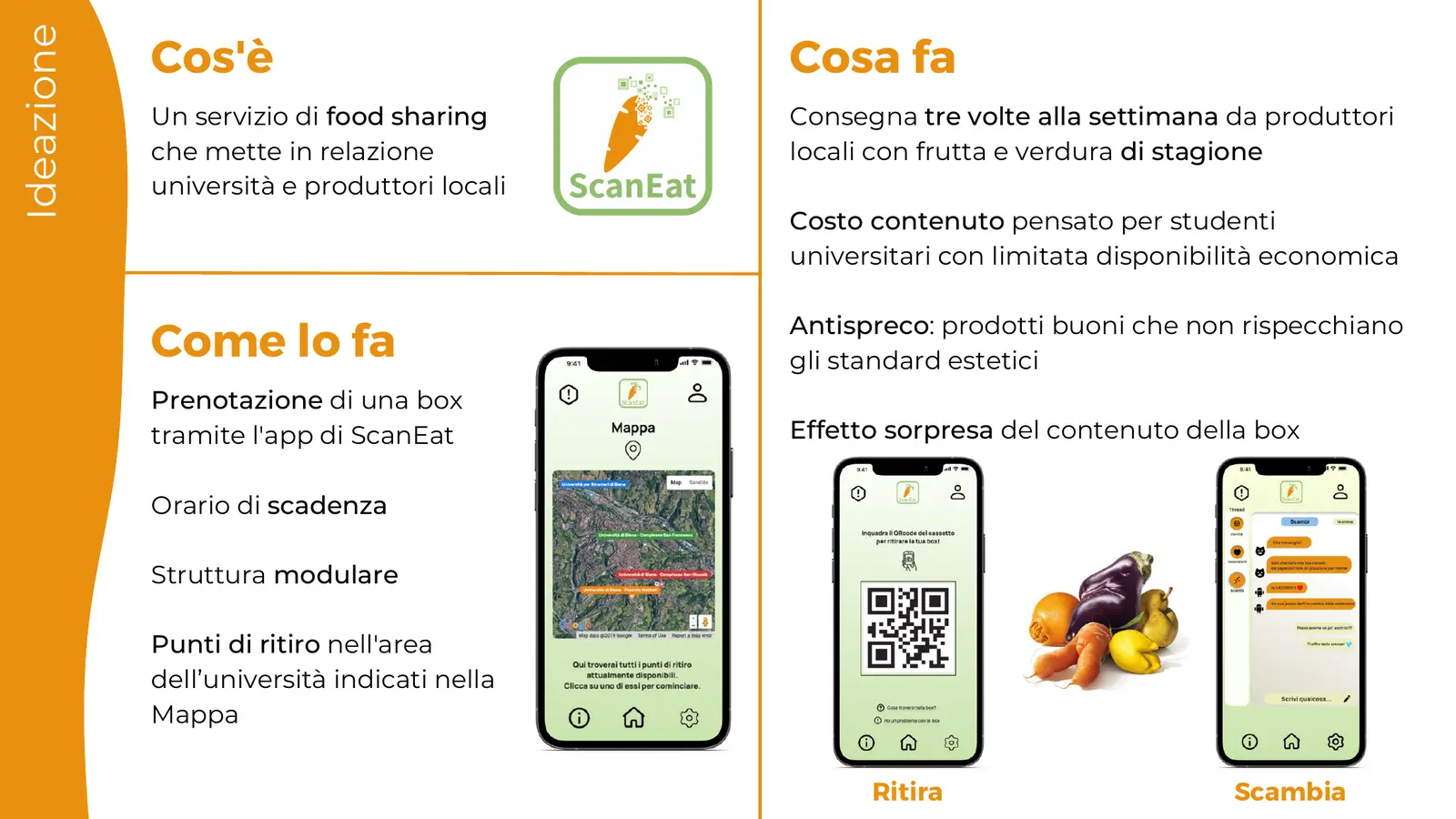
From cultural probes to a stakeholder map and the Enrico persona, then through 5-Whys, How-Might-We, and brainwriting to the concept: ScanEat, a service delivering boxes of local seasonal produce three times a week to pickup points in the university area, with an app for booking, QR-code pickup, and a swap community.
Key decisions
- Pre-booked boxes with a surprise-content effect — inventory-driven, so producers move what they actually have.
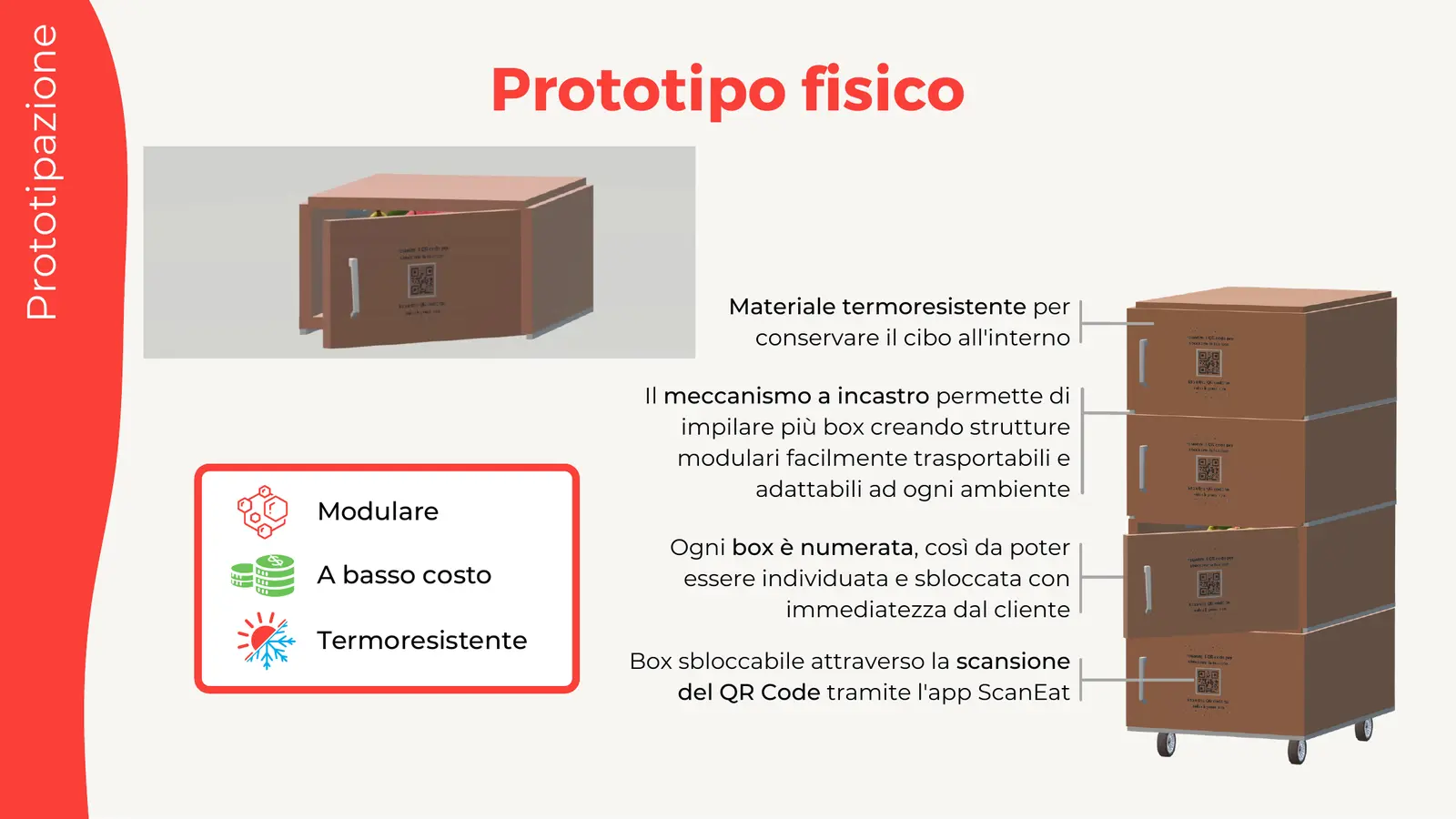
- A physical modular box: stackable interlocking units, heat-resistant material, numbered and QR-unlockable via the app.
- A swap community inside the app, so unwanted items circulate instead of being wasted.
Final result
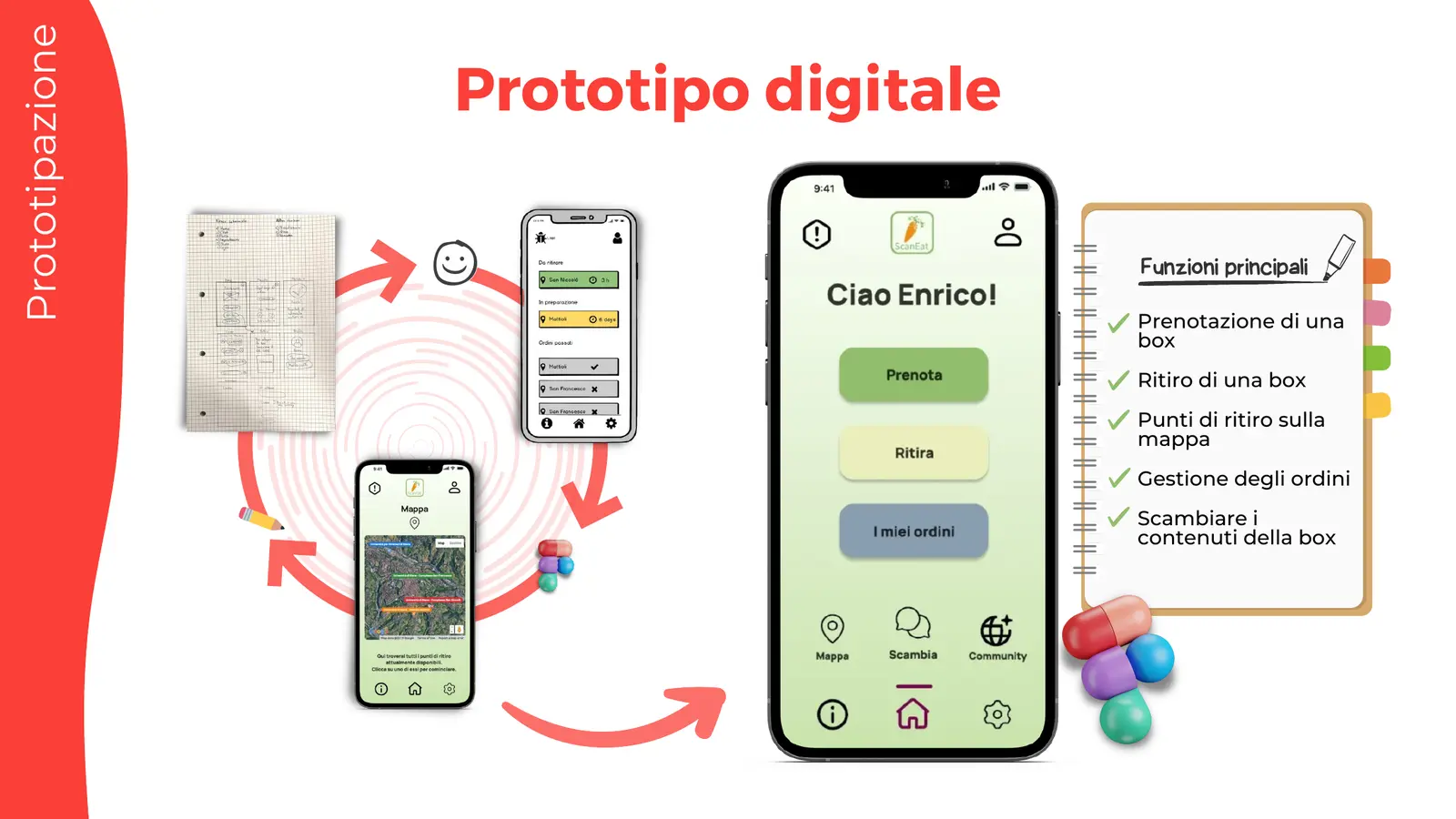
Thinking-aloud usability tests on the Figma prototype and the physical box judged the app intuitive, and surfaced concrete fixes: a more visible “swap” button, better allergen information, and users suggesting insulation or summer cooling for the box.
What I learned
- Logistics is UX: integrating maps to guide users to pickup points matters as much as any screen.
- Detailed user profiles (e.g. allergies) aren't personalization garnish — in food services they are a safety requirement.