Academic case study A03
WESS
A conversational support avatar against “gymtimidation”, designed on a Technogym brief
- Period
- 2023–2024 — MSc coursework
- Context
- Academic concept on a Technogym brief — Experience Design course, University of Siena
- Role
- Designer in the team across research, avatar knowledge base, and app redesign
- Programme
- MSc coursework — Experience Design 2023/24, University of Siena
- Team
- Team of 4 designers
- 1/3
- of young people avoid the gym out of intimidation
- ~265
- intents in the avatar's knowledge base
- 2
- Affect Grid test sessions on the prototype
Problem
“Gymtimidation” — fear and inadequacy toward the gym environment — keeps a large share of people away from physical activity, hurting both physical and psychological well-being. Digital ethnography on social platforms surfaced the same voices over and over: people mocked at the gym, afraid of using machines wrong, training only at home.
- 1/3
- of 4.868 young people (18–25, 10 countries) avoided the gym entirely out of intimidation
- ~50%
- of 2.000 US respondents felt anxiety about signing up
- ~33%
- of 3.000 UK respondents suffer gymtimidation
Source: Focal Data per Adidas, 2023
Source: OnePoll, 2023
Source: OnePoll, 2023
Target user
The avatar's knowledge base was designed around four personas representing the anxieties research surfaced:
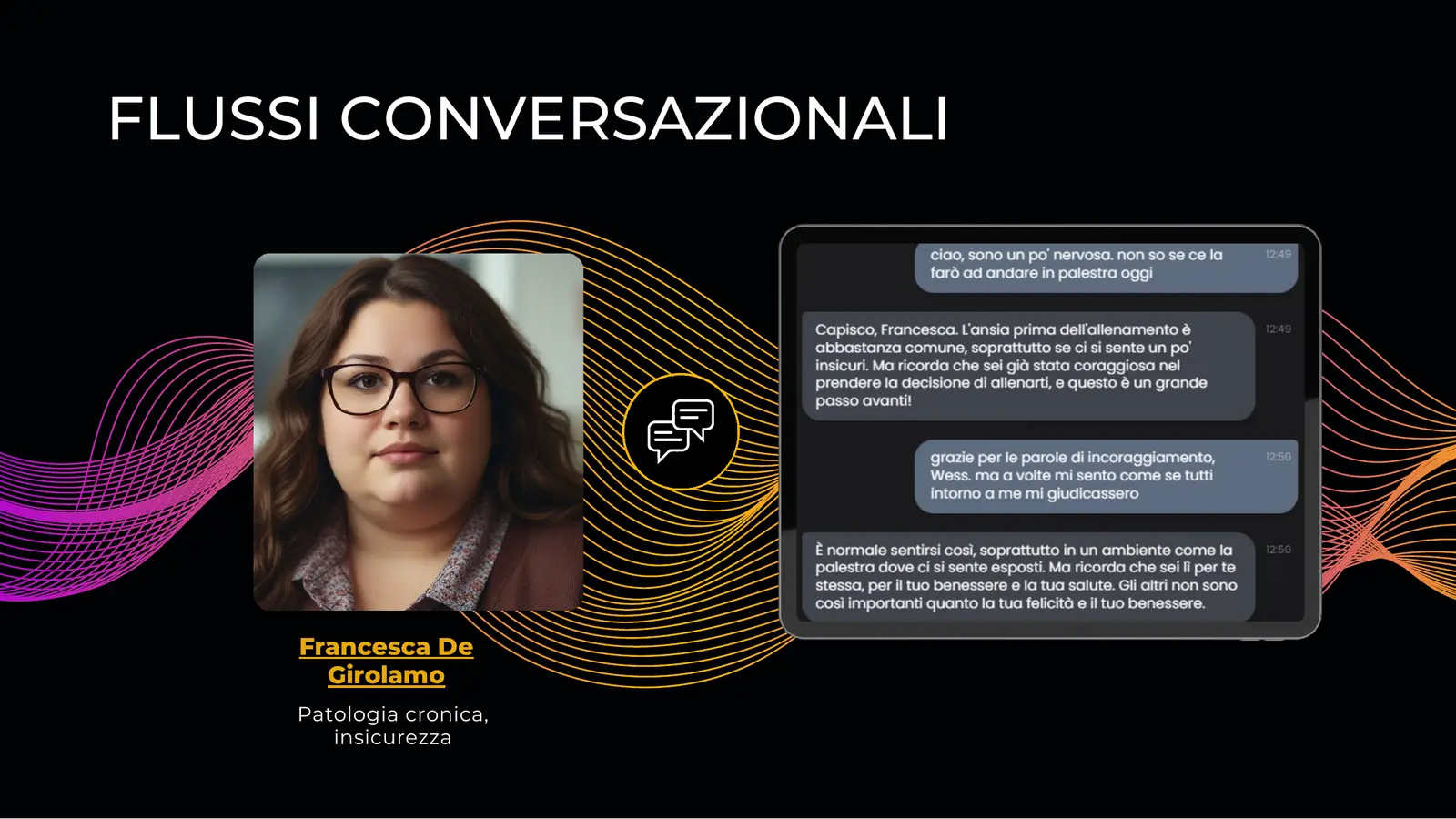
Francesca
chronic illness
- Profile
- Deep insecurity about training in public.
- Goal
- Train safely with guidance that accounts for her condition.
Filippo
physical limitation
- Profile
- Needs exercises adapted to what his body allows.
- Goal
- Use machines correctly without depending on others.
Ivo
chronic illness, low digital literacy
- Profile
- Struggles with technology as much as with the gym floor.
- Goal
- An interface simple enough to not be another barrier.
Noemi
dysmorphia, malnutrition
- Profile
- Body-image anxiety shapes every interaction with fitness.
- Goal
- Motivational support that never turns into body judgment.
My role
Designer in a four-person team on the Experience Design 2023/24 course: from digital ethnography and the POV definition to the avatar's intent spreadsheet (~265 intents in 5 macro-categories) and the redesign of the Technogym app from paper prototype to hi-fi Figma screens.
Process
01
Empathize
Desk research, digital ethnography on social platforms, and probes with users and professionals (psychologists, nutritionists) to map the public sentiment.
02
Define
POV definition and knowledge-base personas embodying insecurity, chronic illness, physical limitation, and body-image anxiety.
03
Ideate
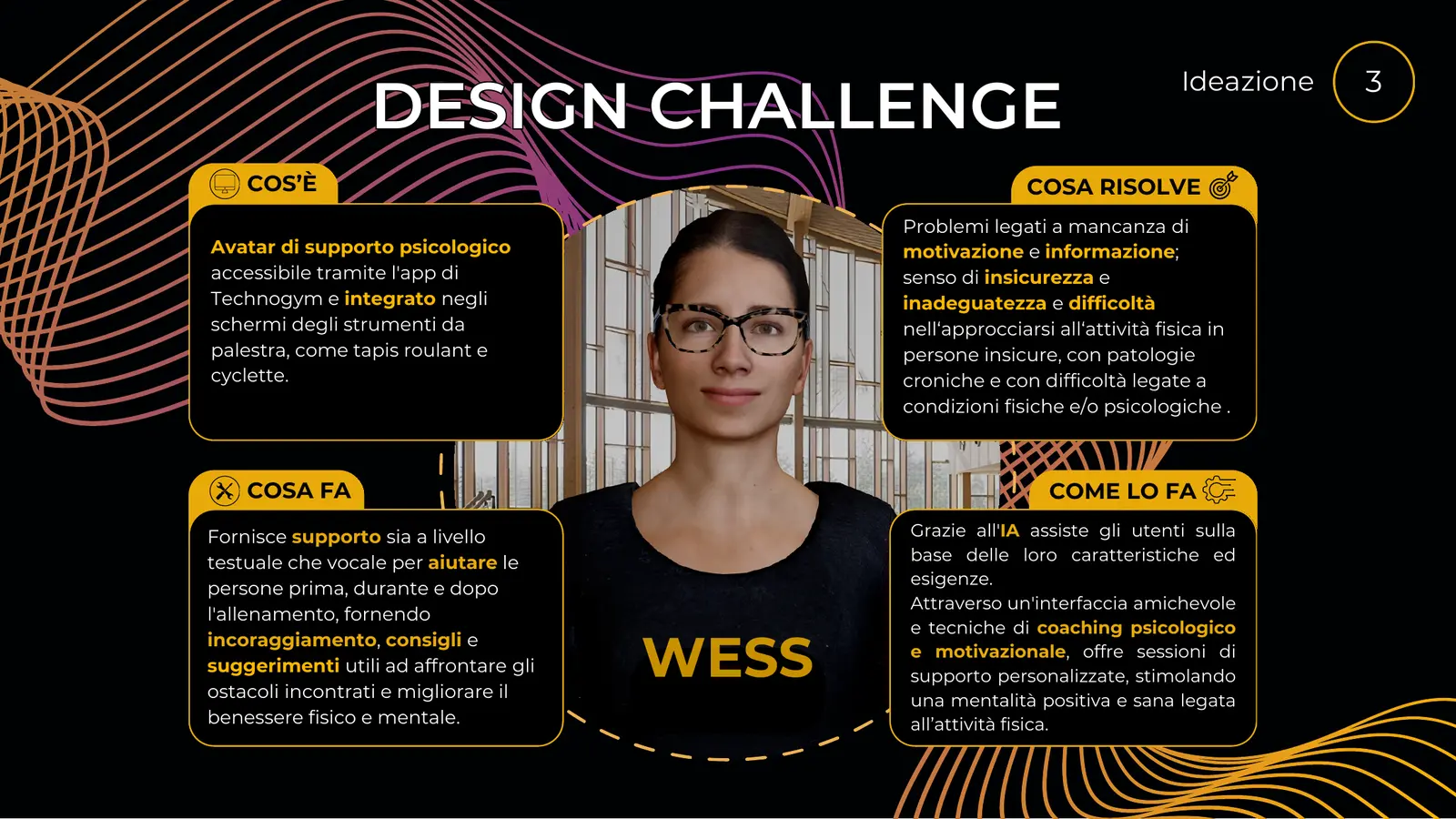
WESS: a psychological-support avatar in the Technogym app and on machine screens (treadmills, bikes), built on the Algho platform.
04
Prototype
Conversational flows per persona, ~265 intents, and the app redesign: paper prototype → Balsamiq wireframes → hi-fi Figma.
Key decisions
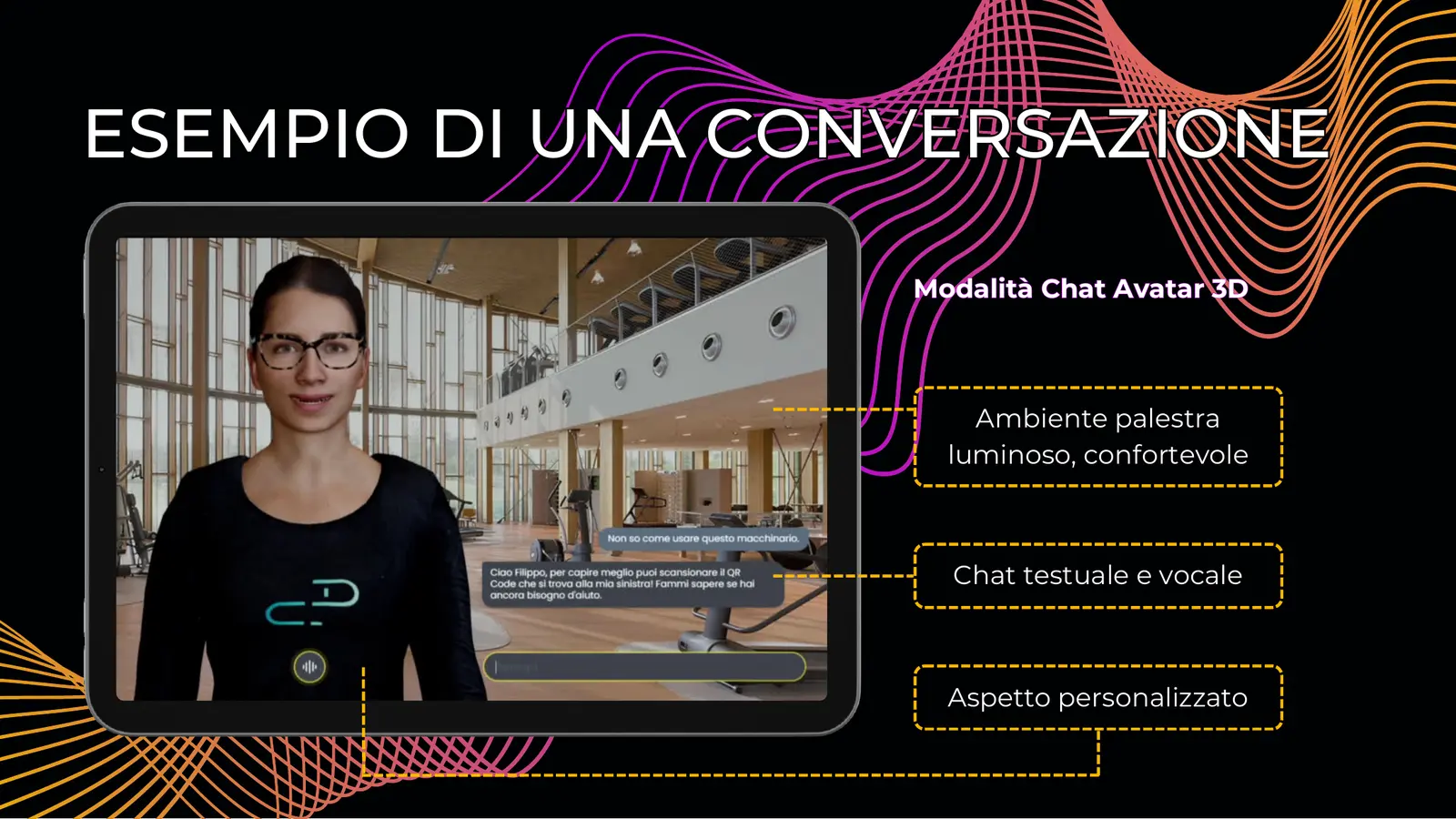
- An inclusive human physiognomy for the avatar — multiple body types and looks the user can choose from at onboarding.
- Both text and voice support (3D chat), so the help works mid-workout without touching the screen.
- QR codes on machines that open WESS with machine-specific guidance — technical advice exactly where the anxiety happens.
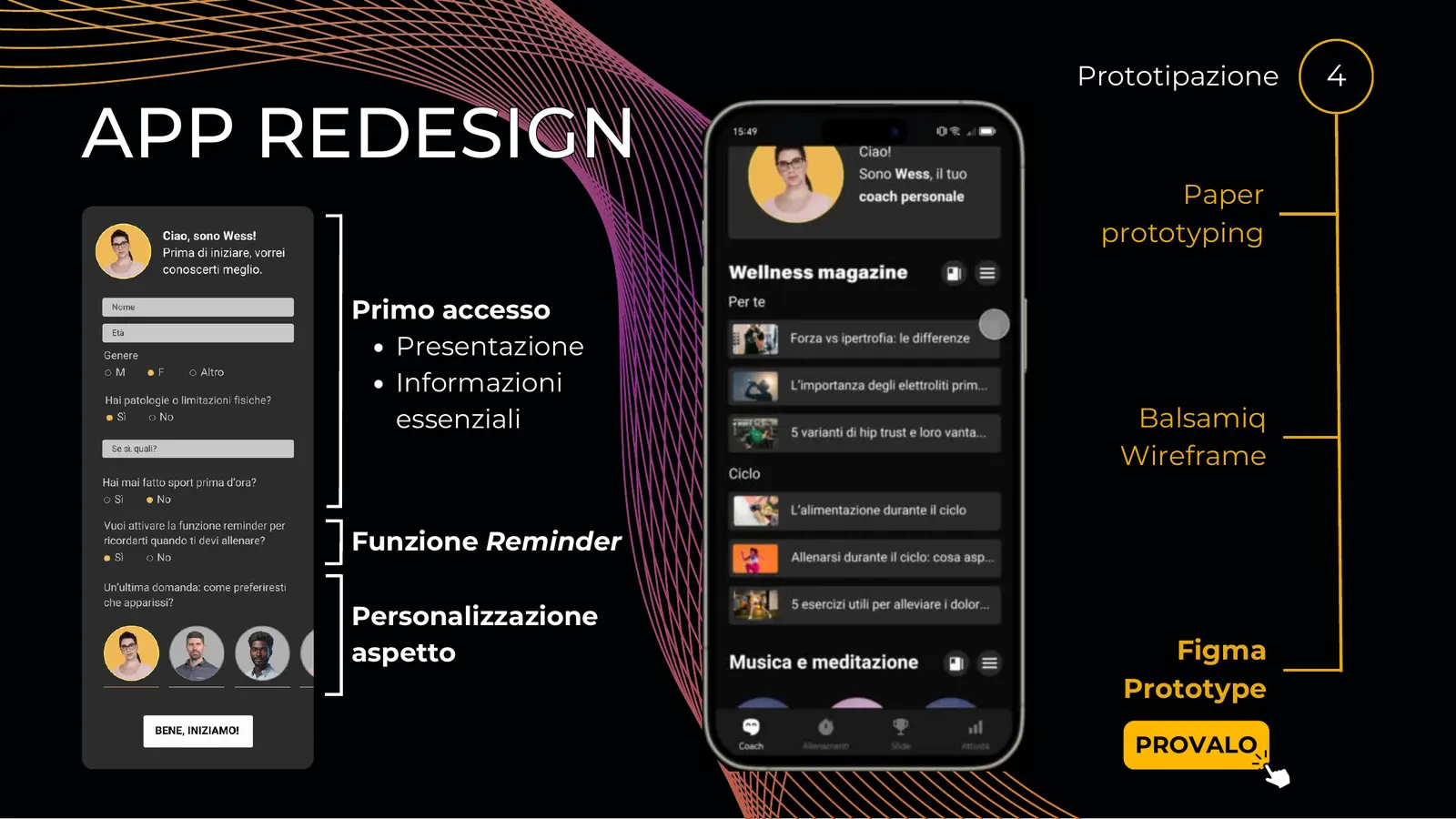
- First-access onboarding that asks about pathologies, limitations, and sport history before proposing anything.
Final result
The team delivered the avatar prototype on Algho with persona-tuned conversational flows, plus the redesigned app — avatar activator in every section, new search bar, personalized wellness magazine. Two Affect Grid test sessions measured users' emotional response to the prototype.
What I learned
- Inclusive language and non-standardized body representation aren't a nice-to-have: for this audience they are the product.
- The avatar-human coach handoff has to be designed explicitly, integrating data from third-party apps (e.g. Apple Health) rather than competing with them.