Academic case study A01
Siena Città della Musica
Service design and human-centered AI for Siena's UNESCO City of Music candidacy
- Period
- 2024 — MSc thesis
- Context
- Commissioned by the Municipality of Siena through the Sena Civitas association — academic thesis work
- Role
- End-to-end across the process, with a vertical focus on implementation and the economic/technological feasibility of the service
- Programme
- MSc thesis — Experience Design, University of Siena
- Team
- Team of 3 designers
- 18
- contextual interviews
- 13
- cities benchmarked
- 6
- concepts from 8 envisioning scenarios
Problem
Siena's musical offer is rich but fragmented: institutions, associations, and independent musicians communicate through disconnected channels, and the city's candidacy as a UNESCO City of Music needs a coordinated identity. The Municipality of Siena, through the Sena Civitas association, asked for a digital route to fix this.
- Musicians: adequate spaces, clear regulations, and low-budget promotion opportunities to contribute to the candidacy.
- Associations and organizers: centralized digital tools to promote events and collaborate with institutions.
- Audiences — citizens and tourists: easy, inclusive access to event information to improve cultural participation.
Target user
- 18
- stakeholders interviewed on site
- 4
- categories: audiences, organizers, musicians, associations
- 8
- recurring interview topics mapped
Interviews spanned the whole local ecosystem — from the Chigiana academy and Siena Jazz to the university choir, the music high school, Corte dei Miracoli, and independent artists — covering spaces, institutional support, collaborations, payments, promotion, event agendas, acoustics, and venue quality.
Luca
25 — indie-rock singer
- Profile
- His band just released an album and wants to promote it in Siena, but few people show up and promotion budgets are out of reach.
- Goal
- Grow his audience through a shared platform for the city's musical events.
My role
In a team of three designers I worked across the whole process, but owned the implementation corner of the prototyping triangle: the feasibility study on AI and web scraping that makes the platform economically sustainable. This is the thesis where my UX training and my current LLM engineering work first met.
Process
01
Empathize
Heuristic benchmark of 13 UNESCO Cities of Music and related platforms (Bologna, Glasgow, Kansas City, Abu Dhabi…) plus 18 contextual interviews with local stakeholders.
02
Define
Personas, empathy maps, stakeholder and ecosystem maps, and user journeys synthesized into a three-audience problem statement.
03
Ideate
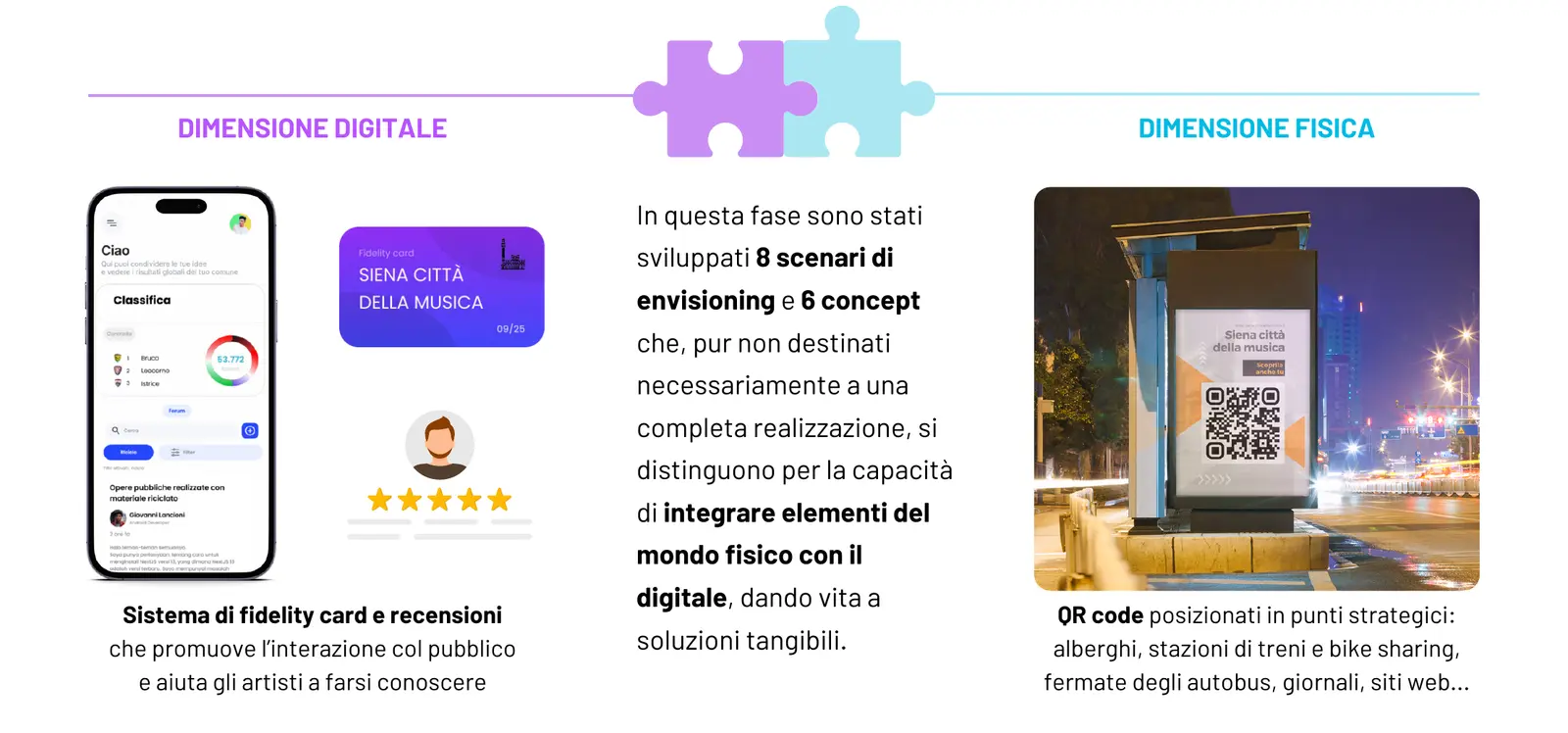
8 envisioning scenarios and 6 hybrid concepts bridging physical and digital — including QR codes at bus stops, hotels, and stations linking the city to the platform.
04
Prototype
Houde & Hill's prototyping triangle: paper prototypes, Balsamiq wireframes, and a hi-fi interactive Figma prototype.
01 · Trigger
- Actions
- Luca's band launches a new album and wants to promote it in Siena.
- ▾ Pain point
- Few people show up at their events; those who do often had no idea the event existed.
- ▸ Opportunity
- A shared platform for this kind of event would cut promotion costs.
02 · Phase 1
- Actions
- Someone at a concert mentions the app for Siena's musical events; Luca signs up.
- ▾ Pain point
- Not all bandmates believe uploading their concerts will bring concrete benefits.
- ▸ Opportunity
- Show how many users installed the app, split between musicians and audiences.
03 · Phase 2
- Actions
- Attendance doesn't change at first, but positive reviews start accumulating on the band's profile.
- ▾ Pain point
- A delay in early results can discourage artists.
- ▸ Opportunity
- Invite audiences to review during and after events, with multimedia attachments.
04 · Phase 3
- Actions
- With a 4.7-star rating, the band earns the audience's trust and new faces show up at concerts.
- ▾ Pain point
- Long-time fans want recognition for having been there from the start.
- ▸ Opportunity
- Badges like “first supporter” to reward early fans and push people to try emerging bands.
05 · Goal
- Actions
- The album takes off and the band gets booked beyond Siena; Luca recommends the app to colleagues.
- ▾ Pain point
- Artists may avoid recommending the app to not feed their own competition.
- ▸ Opportunity
- A referral system rewarding those who share the app — e.g. free visibility boosts.
Key decisions
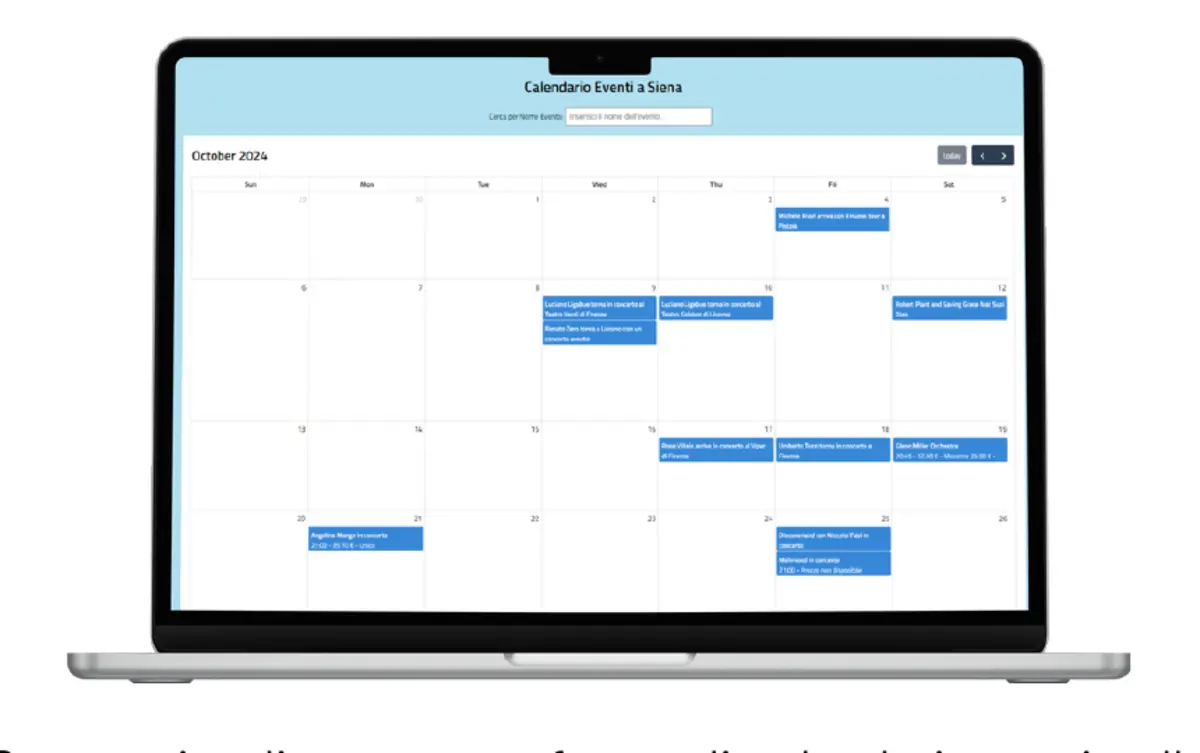
- Automate the event calendar with web scraping (Selenium, Playwright) instead of manual curation — the cost that kills platforms like this.
- Add an LLM (Groq API, llama-3.2-11b-vision-preview) that rewrites scraped event descriptions from scratch, avoiding copyright issues and unifying tone of voice.
- Bridge the physical city and the platform with QR codes at hotels, train stations, bus stops, and newspapers.
- Reward participation: fidelity cards, reviews for musicians, and “first supporter” badges to push audiences toward emerging bands.
Final result
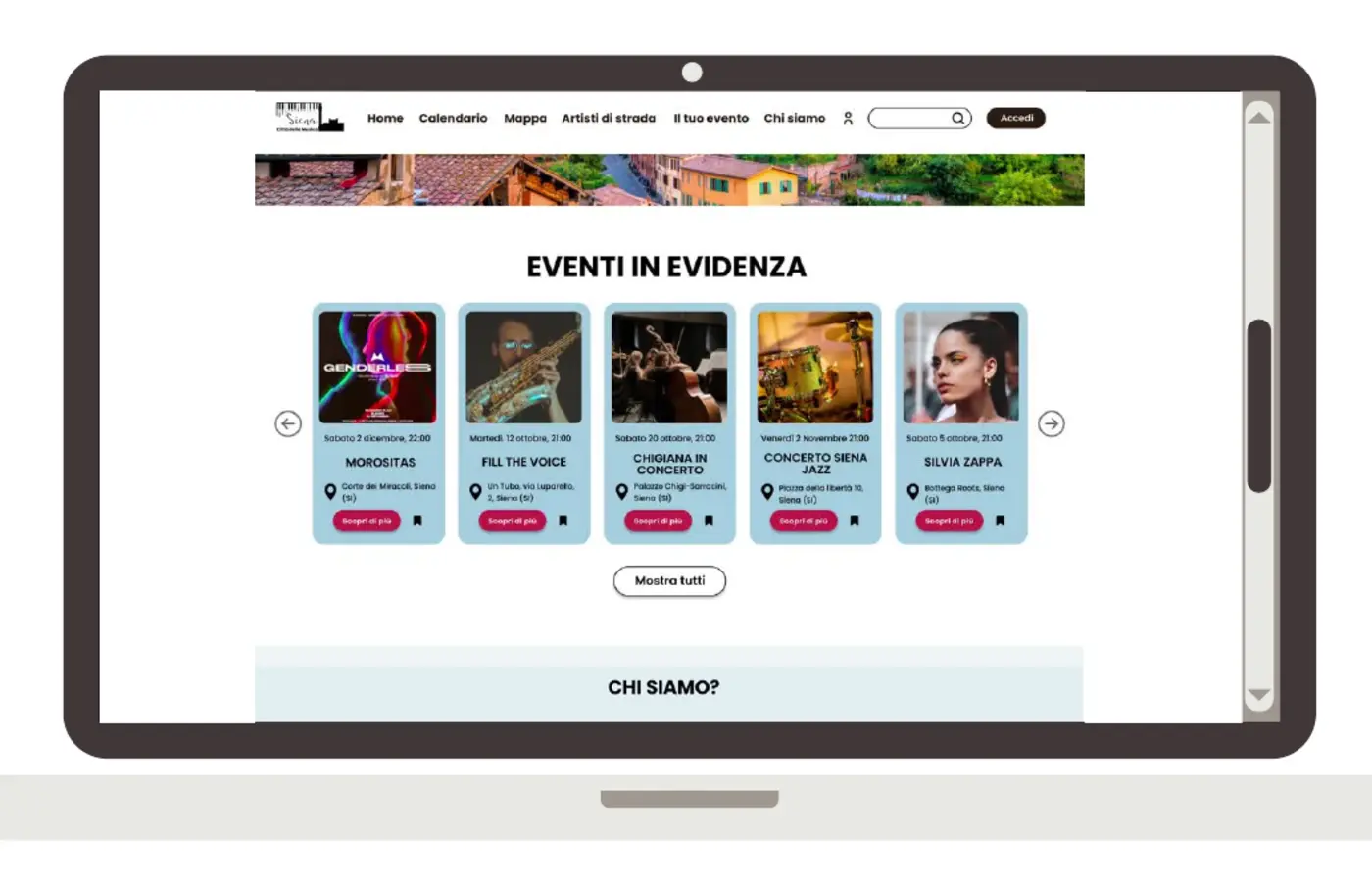
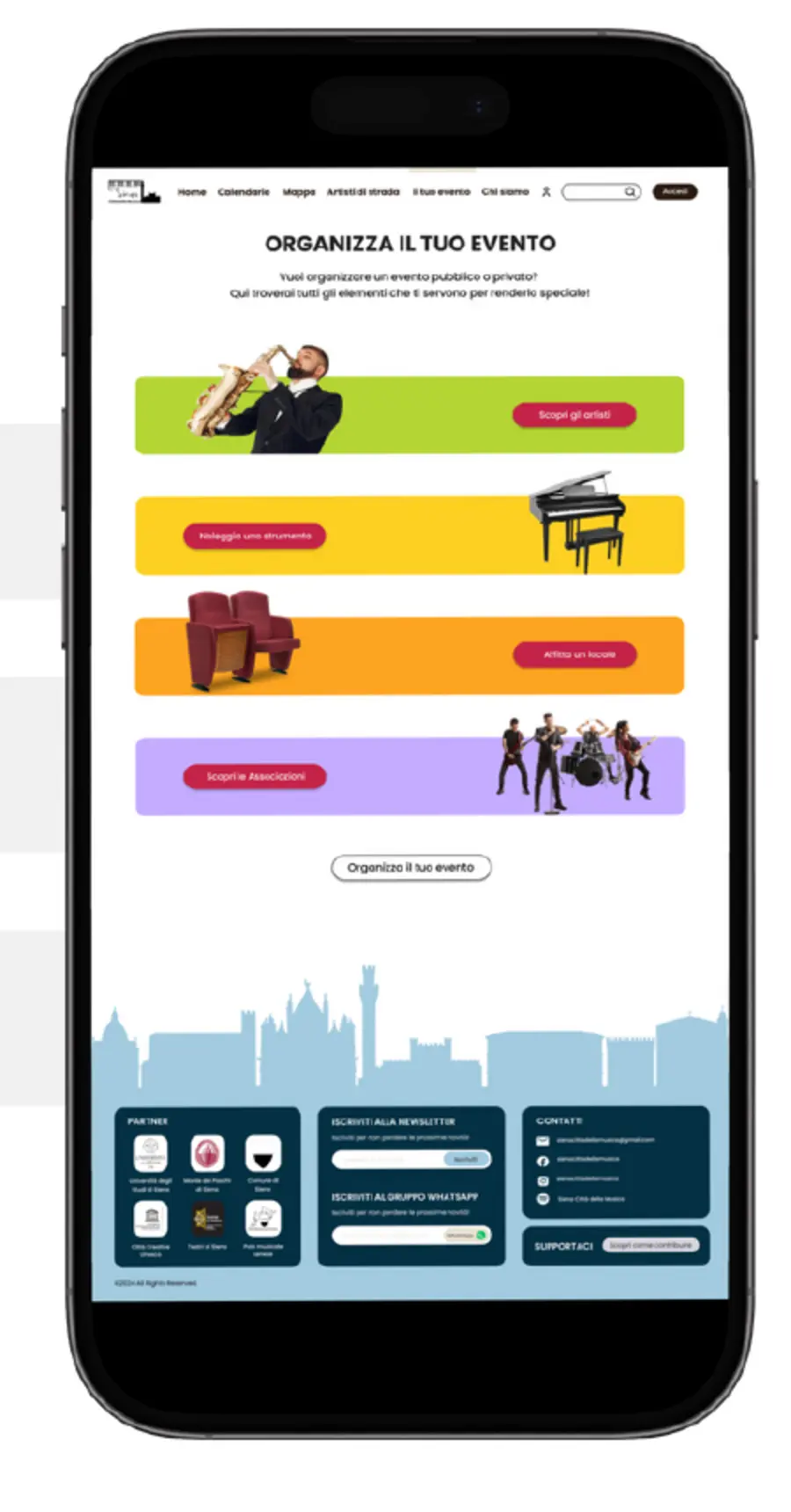
The final deliverables were a hi-fi interactive prototype — event calendar, map of places to play, street-artist section, booking and payment for spaces, regulatory repository — and a working technical feasibility study for the automated content pipeline. The prototype was officially presented to a representative of the Municipality of Siena on 22 November 2024.
What I learned
- A city's cultural vitality is a systemic problem: an app alone doesn't solve it — governance, physical infrastructure, and technology have to move together.
- AI is not a trend here but the thing that makes the project feasible: without automated content the platform dies of manual data-entry costs.